 EN
EN

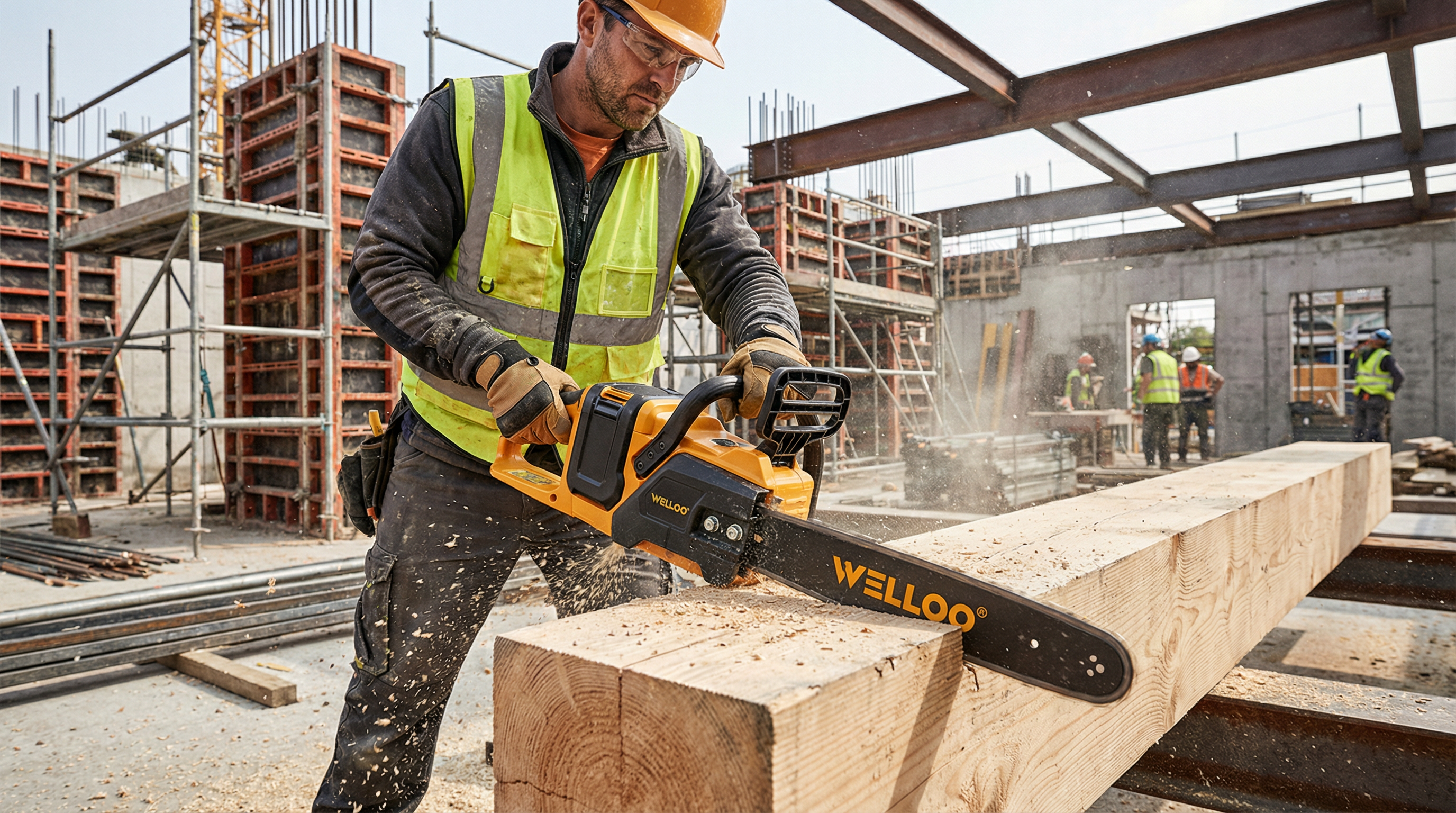
Understanding why were chainsaws invented provides manufacturers with critical insights into tool evolution, user needs, and market positioning strategies that remain relevant in today's power tool industry. The chainsaw's unexpected medical origins reveal fundamental principles about innovation pathways—how tools designed for one purpose often find their greatest success in completely different applications. For modern manufacturers of cutting equipment, reciprocating saws, and industrial power tools, this historical knowledge translates directly into product development philosophy, market segmentation strategies, and customer education approaches that differentiate successful brands from commodity producers.

The question of why were chainsaws invented takes us to late 18th-century surgical theaters, where physicians John Aitken and James Jeffray developed the first chainsaw prototype around 1780 for symphysiotomy—a surgical procedure involving pelvic bone modification during complicated childbirths. This medical tool bore little resemblance to modern forestry equipment, yet it established the fundamental mechanical principle of sequential cutting teeth moving in a continuous chain pattern. For manufacturers today, this origin story illustrates how solving specific technical challenges in one domain can spawn entire industries in unrelated fields, informing research and development investment decisions and technology transfer strategies that maximize intellectual property value across multiple market segments.
The Medical Origins and Early Mechanical Innovation
Surgical Application and Technical Requirements
The original chainsaw invention addressed a specific medical challenge that required precise bone cutting with minimal tissue damage surrounding the surgical site. Eighteenth-century surgeons needed tools capable of controlled, rapid cutting through dense bone material during procedures where speed directly impacted patient survival rates. The chainsaw mechanism—featuring small cutting teeth arranged on a flexible chain—provided superior control compared to traditional bone saws that required extensive manual force and produced unpredictable results. This focus on precision under constrained conditions established design principles that manufacturers still apply when developing Why Were Chainsaws Invented cutting tools for specialized industrial applications where accuracy matters as much as cutting speed.
The mechanical innovation behind why were chainsaws invented centered on distributing cutting force across multiple sequential contact points rather than applying concentrated pressure at a single blade edge. This fundamental approach reduced the physical exertion required from operators while increasing cutting consistency—benefits that translate directly to modern manufacturing concerns about operator fatigue, workplace safety, and production quality control. Early medical chainsaws were manually operated through hand cranks, demonstrating that the chain cutting principle delivered value even without motorization, a lesson relevant for manufacturers developing tools for environments where power sources are limited or where manual operation provides superior control for delicate work.
Material Limitations and Design Evolution
Early chainsaw inventors worked within severe material constraints that shaped their design approaches in ways that inform contemporary manufacturing decisions. The metallurgy available in the late 1700s limited chain tooth hardness, flexibility, and durability, forcing designers to optimize tooth geometry and chain tension systems to compensate for material weaknesses. Understanding why were chainsaws invented within these material constraints helps modern manufacturers appreciate how design innovation often precedes material science advances, suggesting that product development teams should pursue novel mechanical solutions even when ideal materials remain unavailable or cost-prohibitive for target market price points.
The transition from medical to industrial applications required fundamental redesigns that addressed scale, power transmission, and durability under sustained operation conditions vastly different from surgical environments. This evolution illustrates why manufacturers must resist the temptation to simply scale existing designs when entering new market segments, instead conducting thorough analysis of operational context differences that demand purpose-built engineering solutions. The history of why were chainsaws invented demonstrates that successful market expansion requires reimagining core technology rather than merely adapting existing products, a strategic insight particularly valuable for manufacturers considering adjacent market opportunities with their current cutting tool portfolios.
Transition From Medical Device to Forestry Equipment
Industrialization Pressures and Market Opportunity Recognition
The transformation of chainsaws from medical instruments to forestry tools occurred during the industrial revolution when timber demand exploded and traditional axe-based felling methods created severe production bottlenecks. Entrepreneurs and inventors recognized that the mechanical principles behind why were chainsaws invented could address lumber industry challenges if properly adapted to outdoor conditions, larger-scale cutting operations, and the structural characteristics of standing trees rather than human bone. This recognition exemplifies the market opportunity identification process that manufacturers should institutionalize—systematically evaluating whether core technologies developed for one application possess transferable value in industries facing analogous technical challenges with different operational parameters.
The lumber industry's adoption of chainsaw technology was not immediate or automatic, requiring decades of incremental improvements before achieving market viability in forestry applications. Early industrial chainsaws were cumbersome, requiring two-person operation teams and providing marginal productivity advantages over skilled axe workers for many cutting tasks. This gradual adoption curve demonstrates why manufacturers must maintain realistic expectations about market penetration timelines when introducing innovative technologies, even when fundamental performance advantages exist. Understanding why were chainsaws invented and their slow forestry adoption helps manufacturers develop patient market development strategies that allocate sufficient resources for customer education, application engineering support, and iterative product refinement based on field feedback from early adopters.
Power Source Development and Portability Breakthroughs
The question of why were chainsaws invented connects directly to power source evolution, as the technology's practical viability depended entirely on solving portability and power density challenges. Early 20th-century gasoline engine miniaturization enabled the first truly portable chainsaw models, transforming a stationary industrial curiosity into a handheld tool that individual operators could transport through forests and position against trees from multiple angles. For modern manufacturers, this history underscores the critical importance of power system innovation in expanding tool applicability across diverse working environments, suggesting that investments in battery technology, power management electronics, and energy-efficient motor designs yield disproportionate returns in market reach and competitive positioning.
The transition to portable gasoline-powered chainsaws in the 1920s and 1930s created entirely new use cases beyond initial forestry applications, demonstrating how solving one technical constraint—portability—can unlock multiple adjacent markets simultaneously. Emergency services, construction crews, utility line maintenance teams, and landscape management companies all became chainsaw customers once the technology achieved true field portability. This market multiplication effect explains why manufacturers should view enabling technology improvements not merely as incremental product enhancements but as potential market transformation events that justify substantial research investment and aggressive patent protection strategies to capture maximum value from breakthrough innovations.
Manufacturing Implications of Chainsaw Evolution
Product Development Philosophy and Innovation Pathways
Examining why were chainsaws invented reveals a product development pattern where initial applications rarely predict ultimate market success, suggesting manufacturers should maintain organizational flexibility to redirect technologies toward unexpected opportunities. The medical-to-forestry transition occurred because inventors and entrepreneurs remained alert to application possibilities beyond original design intentions, a mindset that requires corporate cultures supporting experimentation, tolerating early-stage failures, and rewarding employees who identify non-obvious technology applications. Manufacturers can institutionalize this approach through formal technology scouting programs that systematically evaluate whether existing intellectual property and manufacturing capabilities address unmet needs in industries currently outside the company's served markets.
The chainsaw's evolution also demonstrates the importance of application-specific design rather than one-size-fits-all product strategies. Modern chainsaws vary dramatically across professional forestry, homeowner, rescue service, and specialty cutting applications, each featuring optimized power levels, safety systems, ergonomics, and durability specifications matching distinct use cases. This market segmentation approach, rooted in understanding why were chainsaws invented for specific purposes before expanding to others, informs manufacturer decisions about product line architecture—whether to develop modular platforms adaptable across applications or purpose-built designs optimized for individual market segments, each strategy carrying different implications for manufacturing complexity, inventory management, and brand positioning.
Customer Education and Market Positioning Strategies
Understanding why were chainsaws invented provides manufacturers with compelling narratives for customer education initiatives that differentiate products based on engineering heritage and application expertise rather than competing solely on specifications and price. Companies that communicate their deep understanding of cutting mechanics, user needs across diverse applications, and the evolution of solutions to persistent industry challenges establish credibility that supports premium pricing and builds customer loyalty resistant to commodity competition. This historical knowledge becomes particularly valuable in B2B contexts where procurement decision-makers seek partners with demonstrated expertise rather than transactional suppliers offering interchangeable products.
The unexpected origins of chainsaw technology offer manufacturers authentic storytelling opportunities that humanize brands and create memorable associations in crowded markets. Content marketing strategies built around the question of why were chainsaws invented engage audiences through novelty while subtly communicating that the manufacturer possesses deep industry knowledge extending beyond current product specifications. This approach proves especially effective when targeting younger procurement professionals and technical specifiers who value brands demonstrating cultural awareness and communication sophistication alongside traditional engineering competence, creating differentiation opportunities in markets where product performance has largely commoditized across major suppliers.
Technological Transfer Lessons for Contemporary Manufacturers
Cross-Industry Innovation and Intellectual Property Strategy
The history of why were chainsaws invented illustrates the strategic value of intellectual property that possesses transferable applications across unrelated industries, suggesting manufacturers should evaluate patent portfolios not only for protection within current markets but for licensing and application potential in adjacent sectors. The fundamental chainsaw mechanism—sequential cutting elements operating in continuous motion—has spawned variations in surgical tools, food processing equipment, demolition devices, and specialized manufacturing machinery, each representing monetization opportunities beyond original development intentions. Forward-thinking manufacturers establish intellectual property assessment processes that systematically identify potential technology applications outside core markets, creating revenue streams that improve research return on investment and fund continued innovation.
Modern manufacturers can apply the chainsaw evolution model by maintaining active relationships with diverse industries facing cutting, separating, or material removal challenges that might benefit from adapted versions of existing technologies. This requires organizational structures supporting cross-functional collaboration between engineering teams and business development personnel with industry expertise spanning beyond the company's traditional markets. Understanding why were chainsaws invented through technology transfer rather than linear product development encourages manufacturers to view their core competencies as flexible assets applicable to multiple problem domains rather than as capabilities locked to specific product categories, fundamentally expanding strategic options for growth and diversification.
Safety Evolution and Regulatory Compliance as Competitive Advantage
The chainsaw industry's safety evolution—from devices with minimal operator protection to modern equipment featuring chain brakes, vibration dampening, and ergonomic designs—demonstrates how manufacturers can transform regulatory compliance from cost burden into competitive differentiation. Early chainsaw accidents and the resulting safety regulations forced manufacturers to innovate in operator protection, ultimately creating products superior in user experience and total cost of ownership beyond mere safety metrics. This history suggests that manufacturers should anticipate regulatory trends and invest proactively in safety innovations before requirements become mandatory, positioning products as market leaders rather than reluctant compliance exercises and building brand reputations for user-centric design that commands premium pricing.
Contemporary manufacturers examining why were chainsaws invented can extract lessons about how safety features evolve from afterthoughts to core value propositions as markets mature and user sophistication increases. Professional buyers increasingly evaluate cutting tools through total cost frameworks incorporating injury prevention, operator fatigue reduction, and long-term ergonomic health rather than focusing narrowly on acquisition cost and cutting speed. This procurement evolution rewards manufacturers who embed safety and ergonomics into fundamental product architecture rather than adding protective features as superficial modifications to existing designs, suggesting that companies should integrate human factors engineering from initial concept stages rather than treating it as a compliance checklist addressed during late-stage product development.
Strategic Market Intelligence From Historical Analysis
Market Timing and Technology Readiness Assessment
Analyzing why were chainsaws invented and their delayed forestry adoption reveals critical insights about technology readiness and market timing that prevent premature product launches burning resources without achieving sustainable market positions. The decades-long gap between initial chainsaw invention and widespread forestry adoption occurred because supporting technologies—portable power sources, durable chain metallurgy, cost-effective manufacturing processes—had not yet matured sufficiently to deliver compelling value propositions for target users. Modern manufacturers face analogous challenges when introducing innovative cutting technologies, requiring rigorous assessment frameworks that evaluate not only core product performance but the entire ecosystem of complementary technologies, infrastructure, user skills, and economic conditions necessary for market success.
The chainsaw adoption pattern also demonstrates the importance of identifying early adopter segments willing to accept higher costs and operational limitations in exchange for performance advantages in specific high-value applications. Professional logging operations adopted chainsaws before homeowners, just as industrial users adopt advanced cutting technologies before general construction markets, following predictable diffusion patterns that manufacturers can map during product planning. Understanding why were chainsaws invented for medical applications before achieving mass market success helps manufacturers develop staged market entry strategies that sequence product introductions across customer segments based on value realization potential rather than attempting simultaneous broad market launches that dilute resources and risk brand damage from introducing products before supporting ecosystems have fully developed.
Competitive Positioning Through Application Expertise
The transformation of chainsaws from single-purpose medical devices to diversified cutting solutions across multiple industries illustrates how manufacturers build defensible competitive positions through deep application expertise rather than relying solely on product feature advantages easily replicated by competitors. Companies that understand the specific operational contexts, performance requirements, and user workflows across diverse chainsaw applications develop products, support services, and customer relationships that create switching costs and brand loyalty transcending pure product specifications. This application-centric approach requires manufacturers to invest in field engineering capabilities, application testing facilities, and customer success programs that commodity-focused competitors typically avoid due to resource intensity and complexity.
Modern manufacturers examining why were chainsaws invented should recognize that the question itself reflects user curiosity about purpose and suitability rather than mere technical specifications, suggesting that effective marketing communications address application fit and use case optimization rather than overwhelming buyers with decontextualized performance data. Business customers increasingly seek suppliers who function as application consultants helping them select optimal solutions for specific operational challenges rather than vendors simply fulfilling purchase orders for standardized products. This consultative approach requires sales and marketing organizations equipped with deep technical knowledge and industry-specific expertise, representing significant investment that pays returns through premium pricing, reduced price sensitivity, and long-term customer relationships resistant to competitive poaching based on marginal cost advantages.
FAQ
What was the original purpose behind chainsaw invention?
Chainsaws were originally invented in the late 18th century by Scottish doctors John Aitken and James Jeffray as surgical instruments for symphysiotomy, a medical procedure performed during complicated childbirths. The device featured a chain with small cutting teeth designed to cut through pelvic bone with greater precision and control than traditional surgical saws. This medical application remained the primary chainsaw purpose for decades before inventors recognized the technology's potential for forestry and lumber industry applications during the industrial revolution when timber demand increased dramatically.
How does chainsaw history inform modern power tool manufacturing?
Understanding why were chainsaws invented provides manufacturers with strategic insights about technology transfer across industries, the importance of solving application-specific challenges rather than developing generic solutions, and how enabling technologies like portable power sources unlock new market opportunities. The chainsaw's evolution from medical device to forestry equipment to diversified cutting tool demonstrates that initial product applications rarely predict ultimate market success, encouraging manufacturers to maintain flexibility in product development and actively explore technology applications beyond original design intentions. This historical perspective informs decisions about intellectual property strategy, market segmentation approaches, and customer education initiatives that differentiate brands in competitive markets.
Why should manufacturers study chainsaw invention when developing cutting tools?
Manufacturers benefit from studying chainsaw history because it reveals fundamental principles about innovation pathways, market adoption patterns, and the relationship between technical capability and commercial success that remain relevant across all cutting tool categories. The chainsaw's development illustrates how breakthrough innovations often require complementary technology maturation before achieving market viability, how safety evolution transforms from compliance burden to competitive advantage, and how application-specific expertise creates defensible market positions. These lessons apply directly to manufacturers developing reciprocating saws, industrial cutting equipment, and specialized material removal tools, informing product development priorities, go-to-market strategies, and long-term competitive positioning decisions.
What market opportunities emerge from understanding chainsaw technology origins?
Recognizing that chainsaws succeeded through cross-industry technology transfer opens manufacturers' perspectives to similar opportunities where existing cutting technologies might address unmet needs in industries currently outside their served markets. The sequential cutting principle behind why were chainsaws invented has applications in medical devices, food processing, specialized manufacturing, emergency response equipment, and numerous other domains where controlled material removal presents technical challenges. Manufacturers who systematically evaluate their intellectual property and core competencies for transferable value across diverse industries discover licensing opportunities, adjacent market entry possibilities, and partnership potentials that significantly expand growth options beyond incremental improvements to existing product lines serving current customer bases.