 EN
EN

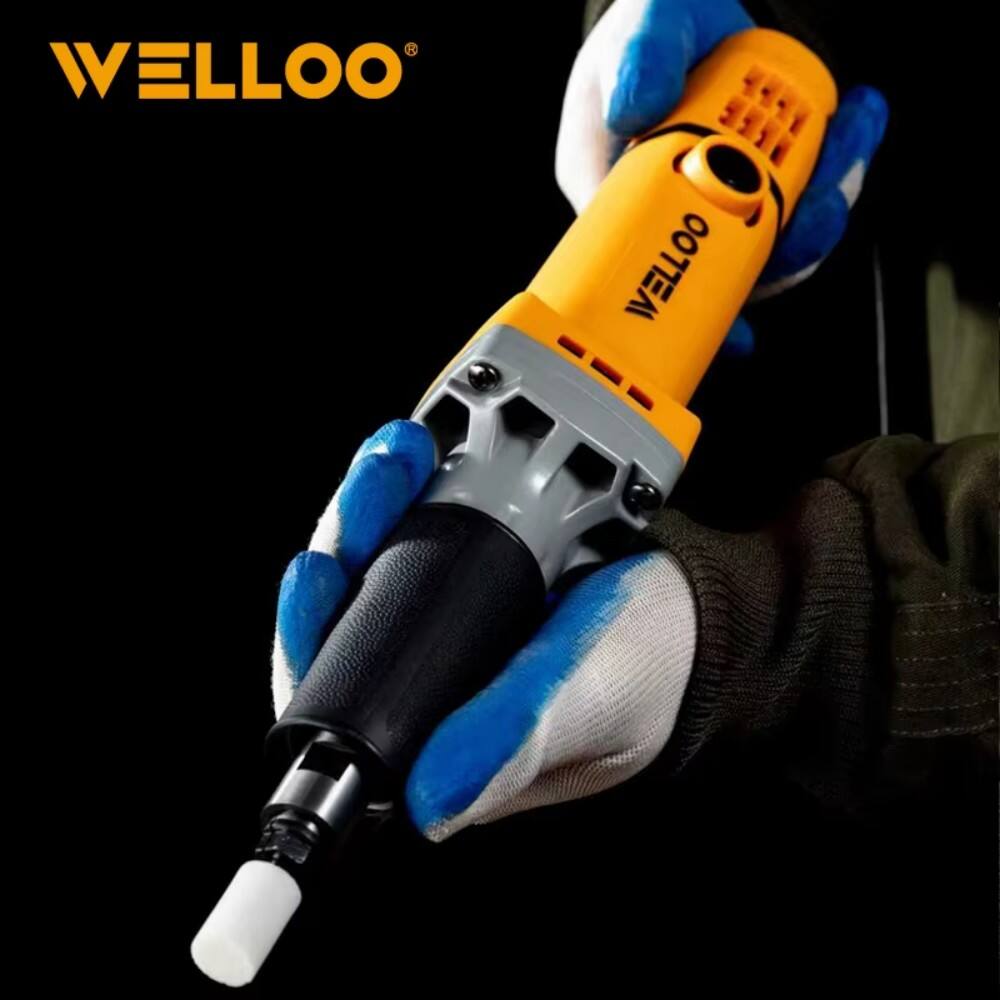
The industrial landscape is changing fast, and at the center of that transformation is how Power Tools store and deliver energy. High-capacity batteries have become one of the most actively evolving components in modern industrial impact drills, redefining what professionals can expect from cordless equipment on job sites. As demand grows for longer runtimes, faster recharging, and greater durability under heavy industrial loads, battery technology is no longer a secondary consideration — it is a primary driver of productivity and competitive advantage in the field.
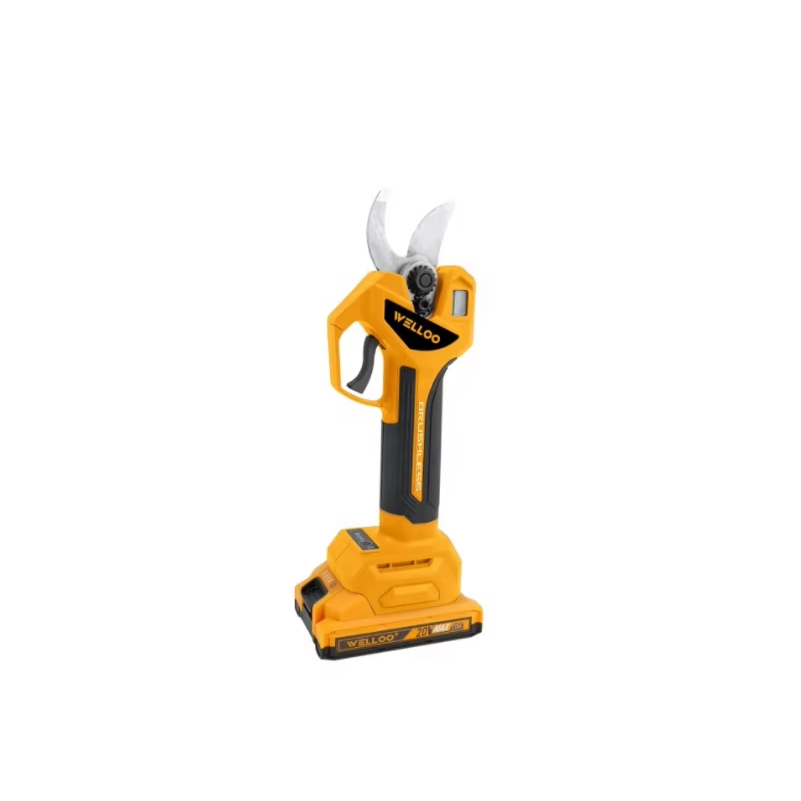
Understanding the future direction of high-capacity batteries for industrial impact drills means understanding how the entire category of power tools is evolving. From construction sites to heavy manufacturing environments, the expectation that cordless power tools can match — and in many cases exceed — the performance of corded alternatives is now a reality rather than an aspiration. This article explores the technological trajectories, engineering challenges, and practical implications of next-generation battery systems for professional-grade impact drills.
The Current State of Battery Technology in Industrial Power Tools
Lithium-Ion as the Dominant Platform
Lithium-ion chemistry has been the foundation of cordless power tools for the past two decades, and it continues to be the dominant platform for industrial impact drills today. The reasons are well understood: lithium-ion cells offer a strong energy-to-weight ratio, relatively low self-discharge rates, and compatibility with sophisticated battery management systems. For demanding applications like high-torque impact drilling in steel, concrete, and dense composite materials, these characteristics translate directly into usable performance on the job.
Modern industrial impact drills operating on 20V or higher platforms can now deliver torque outputs that were inconceivable from cordless power tools just a decade ago. This is partly a function of motor engineering, but the quality and capacity of the battery pack plays an equally decisive role. A high-capacity pack that can sustain high discharge rates without significant voltage sag ensures the motor receives consistent power throughout the work cycle, which is critical in professional settings where inconsistency translates into rework and lost time.
Battery management systems embedded within modern packs for power tools monitor cell temperature, state of charge, and discharge rate in real time. These systems protect against over-discharge, which degrades cell chemistry, and against thermal runaway, which presents a safety risk. As industrial use cases push packs harder and for longer durations, these protection systems have become as important as the cells themselves.
Limitations That Are Pushing Innovation Forward
Despite the progress made, current lithium-ion battery technology still presents real limitations for the most demanding industrial applications. Runtime remains a constraint when power tools are used continuously in high-load scenarios. A professional operator driving large-diameter bolts into structural steel, for example, will deplete a standard 4Ah or 5Ah pack relatively quickly, requiring either a battery swap or a charging pause. In environments where downtime is costly, this limitation has a measurable business impact.
Charging time is another persistent challenge. Even with the rapid chargers currently available for many cordless power tools platforms, fully recharging a high-capacity battery pack still takes a significant amount of time compared to refueling a pneumatic or corded electric tool. Industrial users often manage this by maintaining a rotation of battery packs, but this adds inventory cost and requires organized logistics on busy job sites.
Thermal sensitivity is also a concern. In extreme heat or cold, lithium-ion cells lose performance capacity and can be damaged if pushed hard under such conditions. Industrial power tools are often used outdoors or in warehouses and facilities where temperature control is limited. The sensitivity of battery chemistry to environmental conditions is a limitation that battery engineers continue to work around, though it has not been fully solved by current technology.
Emerging Battery Technologies Shaping the Future of Impact Drills
Solid-State Battery Development and Its Implications
Solid-state battery technology is widely regarded as one of the most promising developments on the horizon for cordless power tools. Unlike conventional lithium-ion batteries, which use a liquid electrolyte to facilitate ion transfer between electrodes, solid-state designs use a solid electrolyte material. This fundamental change in architecture offers several potential advantages that are particularly relevant for high-demand industrial applications.
Solid-state cells are inherently safer than their liquid-electrolyte counterparts because they eliminate the flammable electrolyte that makes conventional lithium-ion batteries vulnerable to thermal runaway events. For industrial power tools used in environments near flammable materials or under sustained high loads, this is a significant safety improvement. Additionally, solid-state cells can support higher energy density, meaning a pack of the same size and weight could store more energy — directly extending the runtime of impact drills between charges.
The durability of solid-state cells is also expected to surpass current lithium-ion chemistry in terms of cycle life. Power tools batteries are routinely charged and discharged multiple times per day in industrial settings, and cycle degradation — the gradual loss of capacity over repeated charge-discharge cycles — is a real cost factor when calculating total cost of ownership. Longer-lived battery packs reduce replacement frequency and therefore reduce operational costs for industrial buyers.
Lithium-Sulfur and Advanced Cell Chemistries on the Research Horizon
Beyond solid-state chemistry, lithium-sulfur batteries represent another research direction that could eventually influence the design of battery packs for industrial power tools. Lithium-sulfur cells offer theoretical energy densities significantly higher than current lithium-ion technology, which would be transformative for high-capacity packs designed to power impact drills through extended heavy-duty work cycles.
The practical challenges of lithium-sulfur technology — including the polysulfide shuttle effect that causes rapid capacity degradation — have so far prevented commercial application in demanding power tools environments. However, ongoing materials science research continues to address these issues, and it is reasonable to anticipate that solutions emerging from laboratory settings over the next decade will gradually find their way into the portable power tools market.
Silicon anode technology is a nearer-term advancement already being incorporated into some higher-performance battery cells. By replacing graphite anodes with silicon-composite materials, manufacturers can increase the amount of lithium ions stored per unit volume, boosting energy density. When applied to industrial power tools battery packs, this means more capacity in a form factor that does not compromise the ergonomics and balance of the tool — an important consideration for operators using impact drills for extended periods.
Fast Charging Infrastructure and Its Role in Industrial Productivity
The Relationship Between Charging Speed and Workflow Efficiency
The ability to rapidly recharge battery packs is not merely a convenience feature — for industrial power tools users, it is a direct productivity variable. When a charged battery is always available, operators can maintain their work rhythm without enforced downtime. As battery capacity increases to extend runtime, the time required to fully recharge those larger packs also increases unless the charging technology keeps pace.
Next-generation fast charging systems for power tools are being engineered to deliver higher current loads to battery packs in a way that minimizes heat generation and avoids damaging cell chemistry. Intelligent chargers that communicate with battery management systems can modulate charging rates based on cell temperature and state of charge, allowing for aggressive fast charging early in the cycle while tapering off as the pack approaches full capacity to protect longevity.
For industrial buyers evaluating cordless impact drills, the charging ecosystem — including charger wattage, compatibility, and smart charging capability — is increasingly being evaluated as part of the total investment, not just the tool itself. The efficiency of the charging infrastructure directly affects how many battery packs need to be purchased and maintained to keep a crew productive throughout a full shift.
Wireless and Inductive Charging Concepts for Industrial Settings
Wireless charging, while more commonly associated with consumer electronics, is beginning to attract attention as a future possibility for industrial power tools environments. Inductive charging pads or mats positioned at designated rest stations in warehouses, assembly lines, or structured job sites could allow battery packs to begin replenishing energy the moment a tool is set down, without any manual connection required.
While current inductive charging technology does not yet deliver the wattage needed to rapidly replenish high-capacity battery packs for power tools, this is an area of active engineering development. The practical appeal for industrial environments is significant: reducing the cognitive load on operators who would otherwise need to actively manage battery rotation, and enabling a more seamless integration of battery charging into natural work pauses.
For managed industrial environments with predictable workflows, the combination of higher-capacity batteries and smarter charging infrastructure could effectively eliminate runtime anxiety from the operation of cordless power tools, making the case for full cordless adoption in applications that currently rely on corded or pneumatic alternatives.
Design and Engineering Trends in High-Capacity Battery Packs for Impact Drills
Balancing Capacity, Weight, and Tool Ergonomics
One of the persistent engineering tensions in developing high-capacity battery packs for industrial power tools is the conflict between energy storage capacity and the physical weight and balance of the assembled tool. A battery pack that stores significantly more energy is, under current chemistry constraints, also physically larger and heavier. For an impact drill that an operator must hold and maneuver continuously, this weight increase directly affects fatigue, accuracy, and the risk of musculoskeletal injury over time.
Advanced cell packing techniques, lightweight casing materials, and optimized pack geometry are all engineering levers being used to minimize the weight penalty of high-capacity packs for power tools. As cell-level energy density improves through chemistry advances, the physical volume needed to achieve a given capacity shrinks, which in turn reduces weight without sacrificing runtime. This progression is one of the key reasons why future impact drills are expected to be both more powerful and more ergonomically manageable than current models.
Battery pack integration with tool body design is also evolving. Rather than treating the battery as an interchangeable accessory bolted to the base of the handle, some design approaches are exploring deeper structural integration that distributes battery cell volume more evenly through the tool body, improving center of gravity and reducing the leverage effect of a rear-heavy battery pack. These design innovations require close collaboration between battery engineers and tool designers.
Smart Battery Systems and Data-Driven Maintenance
The intelligence embedded within battery management systems for industrial power tools is advancing rapidly. Modern high-end battery packs can record detailed performance histories, including total charge cycles, peak discharge events, and temperature exposure profiles. This data enables predictive maintenance approaches where battery packs approaching end of useful life can be identified and replaced before they fail in the field, avoiding costly downtime events.
Connected battery systems that communicate usage data to fleet management platforms are increasingly relevant for large industrial operations managing hundreds of power tools and battery packs across multiple sites. The ability to centrally monitor battery health, optimize charging schedules, and allocate high-capacity packs to the most demanding tasks improves both operational efficiency and the total cost of ownership of the cordless power tools fleet.
As artificial intelligence and machine learning are integrated into battery management systems, the ability to dynamically adjust discharge profiles based on workload prediction will become a practical reality. An impact drill operating in a documented high-torque application might automatically configure its battery management system to conserve cell health by limiting peak discharge rates during periods when full torque is not required, extending both session runtime and long-term battery life.
What These Advances Mean for Industrial Buyers of Impact Drills
Evaluating Battery Specifications as a Core Purchase Criterion
For procurement professionals and operations managers making buying decisions about industrial power tools, the evolving battery landscape means that battery specifications deserve close scrutiny alongside motor power, torque output, and build quality. The ampere-hour rating of available battery packs, the discharge rate capability (often expressed as C-rating), and the thermal management provisions of the battery system are all directly relevant to how well a cordless impact drill will perform in demanding conditions.
Future-proofing is also a valid consideration. Investing in a platform of power tools whose battery ecosystem is actively developed and supported by a manufacturer with a clear roadmap toward higher-capacity and faster-charging solutions is a more defensible purchasing decision than choosing tools whose battery platform appears static. The value of a cordless tool is inseparable from the long-term availability and advancement of compatible battery packs.
Industrial buyers should also evaluate total cost of ownership rather than upfront acquisition cost alone. High-capacity battery packs with longer cycle life and better thermal management may carry a higher initial price but reduce replacement frequency and associated labor costs. In high-use environments where power tools operate across multiple shifts, the economic case for investing in premium battery technology is often compelling when modeled over a three-to-five year horizon.
Preparing for the Transition to Next-Generation Battery Platforms
The transition from current lithium-ion chemistry to next-generation battery platforms — whether solid-state, silicon-anode enhanced, or based on other emerging chemistries — will not happen overnight. Industrial buyers of power tools can expect an evolutionary rather than revolutionary transition, with improvements arriving incrementally as new cell technologies achieve commercial viability and scale. Planning purchasing cycles to take advantage of these improvements requires staying informed about the development timelines of battery technology in the tools industry.
Training and safety protocols for handling and maintaining high-capacity battery packs will also need to evolve as new chemistries enter the market. Even if next-generation batteries are intrinsically safer than current lithium-ion designs, the higher energy densities involved mean that proper storage, transportation, and disposal procedures will remain important aspects of responsible fleet management for industrial power tools operations.
Organizations that begin building internal expertise in battery system evaluation and management today will be better positioned to make informed decisions as the market evolves. The companies that treat battery technology as a strategic component of their power tools infrastructure — rather than a commodity accessory — will gain a meaningful operational advantage in the years ahead.
FAQ
How does battery capacity affect the performance of industrial impact drills?
Battery capacity, measured in ampere-hours, determines how much energy is stored in a pack and therefore how long an impact drill can operate before recharging. Higher capacity packs allow power tools to sustain high-torque output for longer periods without voltage sag, which is critical in continuous industrial applications. For heavy fastening tasks, a high-capacity battery also helps the tool maintain consistent performance rather than weakening as the pack depletes.
Are current cordless power tools batteries safe for use in industrial environments with temperature extremes?
Standard lithium-ion batteries used in most power tools today are sensitive to temperature extremes. In very high temperatures, cells can degrade faster or pose safety risks; in very cold conditions, available capacity decreases noticeably. Industrial users in environments with temperature extremes should look for battery packs with active thermal management systems and follow manufacturer guidance on operating and storage temperature ranges to maintain safety and performance.
What is the expected timeline for solid-state batteries to appear in commercial power tools?
Solid-state battery technology is progressing in research and early commercial applications, particularly in sectors like electric vehicles. For industrial power tools, commercial availability of solid-state battery packs is generally anticipated sometime in the latter part of this decade, though exact timelines depend on manufacturing scalability and cost reduction. In the near term, improvements to existing lithium-ion chemistry — such as silicon anode enhancements — are more immediately relevant for buyers of cordless power tools.
How should industrial operations manage a fleet of high-capacity battery packs for impact drills?
Effective fleet management of battery packs for industrial power tools involves maintaining a rotation sufficient to keep operations running during charging periods, using smart chargers that protect cell longevity, tracking cycle counts and health data where battery management systems support it, and following proper storage procedures for packs not in active use. Organizations with large fleets benefit significantly from centralized tracking systems that give visibility into the status and health of every pack in the operation.
Table of Contents
- The Current State of Battery Technology in Industrial Power Tools
- Emerging Battery Technologies Shaping the Future of Impact Drills
- Fast Charging Infrastructure and Its Role in Industrial Productivity
- Design and Engineering Trends in High-Capacity Battery Packs for Impact Drills
- What These Advances Mean for Industrial Buyers of Impact Drills
-
FAQ
- How does battery capacity affect the performance of industrial impact drills?
- Are current cordless power tools batteries safe for use in industrial environments with temperature extremes?
- What is the expected timeline for solid-state batteries to appear in commercial power tools?
- How should industrial operations manage a fleet of high-capacity battery packs for impact drills?