 EN
EN

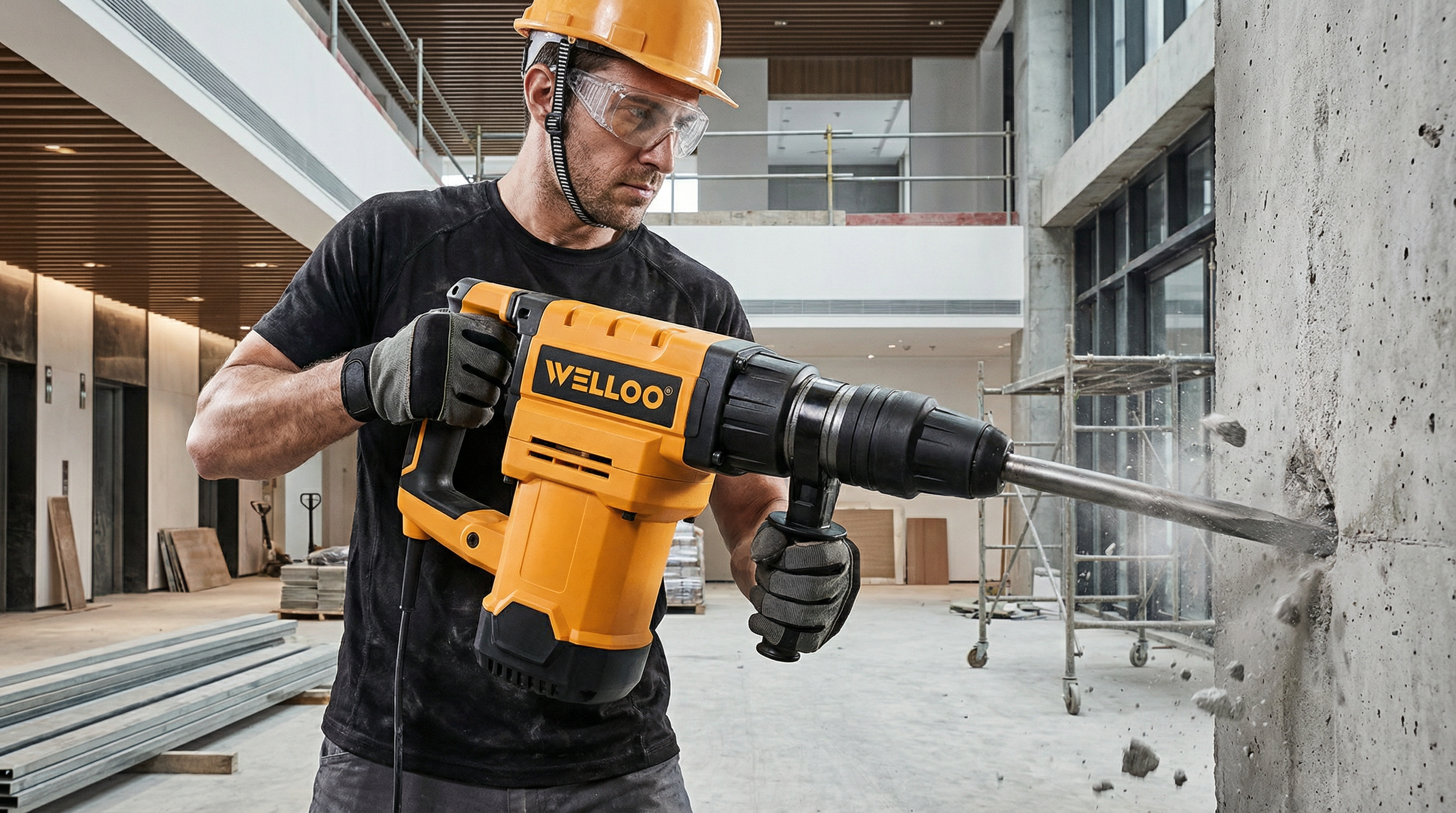
The global woodworking industry is experiencing a transformative shift as we approach 2026, driven by technological innovation, sustainability mandates, and evolving manufacturing efficiency requirements. B2B wholesale buyers are increasingly seeking woodworking tools that combine precision, durability, and operational cost-effectiveness to meet the demands of modern production environments. Understanding which woodworking tools are gaining traction in wholesale markets enables procurement managers, industrial distributors, and manufacturing enterprises to make informed investment decisions that align with emerging industry standards and customer expectations.
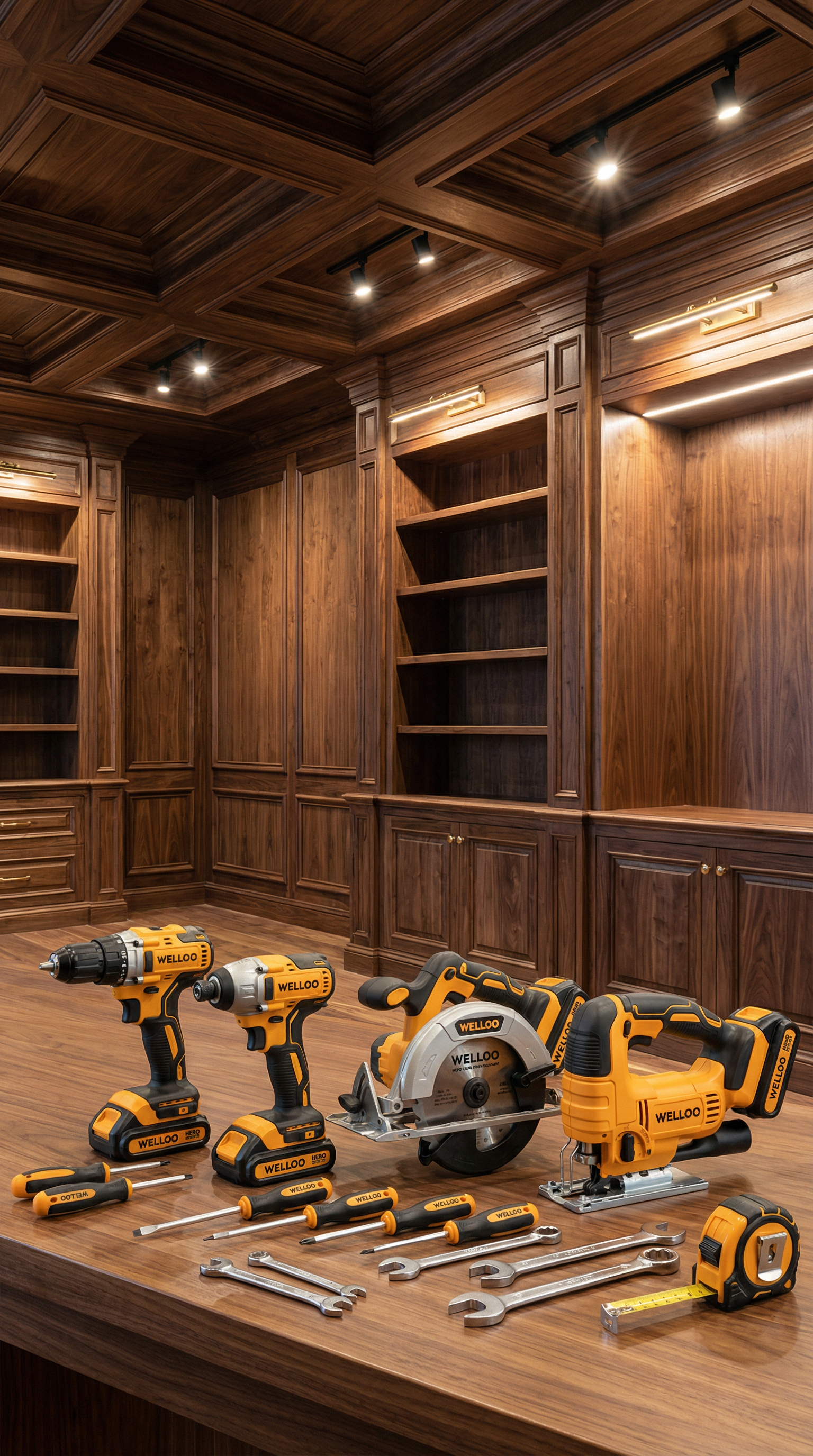
The wholesale woodworking tools market for 2026 reflects several converging trends including automation integration, ergonomic design prioritization, energy efficiency optimization, and multi-material compatibility. These trends are reshaping procurement strategies across furniture manufacturing, cabinetry production, construction carpentry, and specialty woodworking sectors. This comprehensive analysis identifies the specific categories of woodworking tools experiencing the strongest demand growth, examines the technical attributes driving their adoption, and provides actionable insights for wholesale buyers navigating this dynamic marketplace.
Pneumatic Fastening Systems Dominating High-Volume Production Environments
Why Pneumatic Nail Guns Lead Wholesale Demand
Pneumatic fastening systems have secured a dominant position in the wholesale woodworking tools market due to their exceptional performance characteristics in high-volume production settings. These tools deliver consistent driving force, rapid cycle times, and minimal maintenance requirements compared to alternative fastening technologies. Wholesale buyers particularly value pneumatic nail guns for their reliability in continuous operation scenarios, where downtime directly impacts production throughput and profitability. The B2B market has shown strong preference for pneumatic systems operating at standardized pressure ranges between 0.45 to 0.8 MPa, which provide optimal balance between power delivery and air consumption efficiency.
The trending pneumatic woodworking tools for 2026 feature enhanced depth adjustment mechanisms, anti-dry fire technology, and improved exhaust management systems that reduce workplace air contamination. Industrial buyers are prioritizing models with tool-free depth control that allows operators to adjust fastener penetration without production interruption. The wholesale market has seen significant growth in demand for Woodworking Tools incorporating sequential and contact firing modes, providing versatility for both precision placement and rapid production applications.
Technical Specifications Driving Wholesale Selection
B2B buyers evaluating pneumatic fastening systems for 2026 focus on several critical technical parameters that directly impact operational efficiency and total cost of ownership. Magazine capacity has become a key differentiator, with wholesale demand favoring models accommodating 50 to 100 fasteners to minimize reload frequency during production runs. Fastener compatibility range represents another crucial selection criterion, as versatile woodworking tools capable of driving multiple nail lengths and gauges reduce inventory complexity and equipment proliferation across production facilities.
Weight distribution and ergonomic balance have emerged as significant factors influencing wholesale purchasing decisions, particularly as manufacturers address workforce fatigue and repetitive strain concerns. The trending pneumatic woodworking tools incorporate composite housing materials that reduce overall weight by 15 to 25 percent compared to traditional metal construction, while maintaining structural integrity and impact resistance. Advanced exhaust redirection systems that divert compressed air away from the operator's workspace have become standard features in wholesale-preferred models, addressing both comfort and safety requirements in industrial environments.
Maintenance Considerations Impacting Long-Term Value
The wholesale woodworking tools market for pneumatic systems places increasing emphasis on maintenance accessibility and component longevity as buyers adopt total cost of ownership evaluation frameworks. Industrial purchasers are gravitating toward designs featuring externally accessible wear components including driver blades, O-rings, and trigger assemblies that can be serviced without complete tool disassembly. This maintenance-friendly architecture reduces downtime duration and minimizes the technical expertise required for routine service interventions.
Trending pneumatic woodworking tools incorporate self-lubricating mechanisms and moisture filtration systems that extend service intervals and reduce consumable costs. Wholesale buyers particularly value integrated lubrication reservoirs with visual indicators that simplify maintenance scheduling and prevent premature component wear caused by inadequate lubrication. The B2B market has shown strong preference for models utilizing standardized wear parts compatible across multiple tool variants, enabling inventory consolidation and reducing spare parts management complexity for buyers maintaining diverse woodworking equipment fleets.
Cordless Power Tool Systems Gaining B2B Market Share
Battery Technology Advancements Transforming Wholesale Preferences
The cordless segment of woodworking tools has experienced remarkable growth in wholesale markets as lithium-ion battery technology advances eliminate traditional performance compromises associated with untethered operation. The 2026 market trend strongly favors high-capacity battery systems in the 4.0 to 6.0 ampere-hour range that provide extended runtime sufficient for full-shift operation without mid-day charging interruptions. B2B buyers are increasingly adopting platform-based battery systems where a single battery architecture powers multiple tool types, reducing investment in charging infrastructure and simplifying battery inventory management across production facilities.
Wholesale demand for cordless woodworking tools has shifted toward brushless motor configurations that deliver 30 to 50 percent longer runtime compared to brushed equivalents while providing superior power density and extended motor life. Industrial buyers recognize that brushless technology significantly reduces maintenance requirements by eliminating carbon brush replacement intervals, a particularly valuable attribute in high-utilization production environments. The trending cordless systems incorporate intelligent battery management electronics that communicate charge status, temperature conditions, and health metrics to users, enabling predictive maintenance strategies and optimizing battery lifecycle management.
Application Versatility Driving Wholesale Adoption
The expanding capabilities of cordless woodworking tools have enabled their adoption in applications previously dominated by pneumatic and corded electric systems. Wholesale buyers are particularly interested in cordless circular saws, reciprocating saws, and impact drivers that deliver performance comparable to their tethered counterparts while eliminating infrastructure dependencies and enhancing worksite mobility. The 2026 market shows strong growth in cordless tools featuring electronic torque control and variable speed regulation, providing the precision control required for quality-sensitive woodworking applications.
B2B purchasers value cordless woodworking tools for their operational flexibility in diverse production scenarios including field installation, remote jobsites, and production areas where air line or electrical infrastructure installation proves impractical or cost-prohibitive. The wholesale market has responded with ruggedized cordless systems incorporating enhanced dust and moisture resistance ratings that maintain reliability in challenging environmental conditions. Trending cordless platforms include integrated work lights, belt clips, and auxiliary handles that enhance usability in varied operational contexts, addressing the diverse application requirements characteristic of industrial woodworking environments.
Total Cost Analysis Favoring Cordless Investment
Wholesale buyers conducting comprehensive cost analysis increasingly recognize that cordless woodworking tools deliver favorable total cost of ownership when infrastructure installation, maintenance, and operational flexibility factors are properly weighted. The elimination of compressed air systems for fastening applications removes significant capital investment in air compressors, distribution piping, and condensate management equipment, while also reducing ongoing energy consumption and maintenance costs. Similarly, cordless alternatives to corded electric woodworking tools eliminate extension cord requirements, reduce tripping hazards, and enhance workplace organization.
The trending approach in B2B procurement involves hybrid equipment strategies where cordless woodworking tools serve mobile and flexible applications while stationary high-volume processes continue utilizing pneumatic or corded systems optimized for continuous operation. This strategic equipment allocation maximizes the distinct advantages of each technology category while managing battery investment and charging infrastructure requirements. Wholesale buyers are particularly focused on cordless platform ecosystems offering extensive tool variety, as broader platform adoption improves battery utilization efficiency and reduces per-tool battery investment through shared battery pools across production operations.
Precision Cutting Systems Meeting Evolving Quality Standards
CNC Integration in Production-Grade Woodworking Tools
The convergence of digital control technology with traditional woodworking tools represents a significant trend shaping the wholesale market for 2026. Computer numerical control integration in cutting systems, routers, and drilling equipment enables unprecedented precision, repeatability, and complexity in woodworking operations. B2B buyers are investing in CNC-enabled woodworking tools that bridge the gap between fully automated manufacturing cells and manual production methods, providing programmable precision at accessible investment levels for mid-sized manufacturers and custom production specialists.
Wholesale demand focuses on entry-level and mid-range CNC woodworking tools featuring intuitive programming interfaces, rapid setup protocols, and compatibility with standard CAD/CAM software ecosystems. Industrial buyers particularly value systems incorporating automatic tool changing capabilities, vacuum workholding integration, and dust collection coordination that minimize manual intervention and enhance production efficiency. The trending CNC woodworking tools offer modular expansion capabilities allowing buyers to incrementally add functionality including additional axes, enhanced spindle power, and expanded work envelope dimensions as production requirements evolve.
Manual Precision Tools Maintaining Market Relevance
Despite automation advances, traditional manual precision woodworking tools continue demonstrating strong wholesale demand particularly among custom woodworking operations, restoration specialists, and quality-focused manufacturers. The 2026 market shows renewed interest in premium hand planes, precision marking tools, and high-quality chisels as craftsman-oriented production models gain commercial traction. B2B buyers recognize that certain woodworking operations including fine fitting, surface finishing, and detail work remain more efficiently executed with skilled manual techniques supported by superior precision tools.
Wholesale trends in manual woodworking tools emphasize superior material quality, ergonomic refinement, and precise manufacturing tolerances that deliver measurably better performance than economy alternatives. Industrial buyers are investing in woodworking tools featuring properly hardened and tempered cutting edges that maintain sharpness through extended use, reducing resharpening frequency and downtime. The trending manual precision tools incorporate ergonomically optimized handles using materials that reduce fatigue during extended use while providing secure grip under varied environmental conditions including temperature extremes and presence of finishing materials.
Hybrid Systems Combining Manual Control with Power Assistance
An emerging category in the wholesale woodworking tools market involves hybrid systems that preserve operator control and tactile feedback while incorporating power assistance to reduce physical effort and enhance precision. These tools particularly appeal to B2B buyers serving markets where craftsmanship perception carries commercial value while production efficiency remains economically critical. Hybrid woodworking tools include power-assisted hand planes, electronically regulated carving systems, and precision drilling guides with integrated power feed mechanisms.
The 2026 wholesale market shows growing interest in hybrid woodworking tools incorporating sensors and feedback systems that assist operators in maintaining consistent pressure, angle, and feed rate during manual operations. These intelligent assistance features help reduce skill variation across workforce populations while accelerating training timelines for new operators. B2B buyers value hybrid systems that preserve the flexibility and adaptability of manual processes while capturing some efficiency and consistency benefits associated with automated equipment, creating an economically attractive middle path for operations requiring production volumes beyond manual capacity but below full automation justification thresholds.
Specialty Tools Addressing Niche Applications and Materials
Multi-Material Compatibility Requirements
The diversification of materials used in contemporary woodworking applications has driven wholesale demand for specialized tools capable of processing composite materials, engineered wood products, and hybrid constructions combining wood with plastics, metals, and advanced composites. B2B buyers require woodworking tools that maintain performance and edge retention when processing abrasive materials including medium-density fiberboard, particleboard, and cement-bonded wood products that rapidly degrade conventional tooling. The trending solution involves specialized cutting tools featuring carbide tips, diamond coatings, or advanced ceramic materials that extend service life when processing challenging material combinations.
Wholesale markets show particular growth in woodworking tools designed for processing engineered lumber products including laminated veneer lumber, cross-laminated timber, and oriented strand board which demand different cutting approaches than traditional solid wood. Industrial buyers are investing in specialized saw blades, router bits, and drilling systems optimized for these materials, recognizing that attempting to process engineered products with conventional solid wood tooling results in poor surface quality, excessive tool wear, and reduced production efficiency. The 2026 trend emphasizes application-specific woodworking tools rather than general-purpose equipment as material diversity continues expanding across the industry.
Dust Collection Integration Becoming Standard
Regulatory pressure regarding workplace air quality combined with growing awareness of wood dust health hazards has elevated dust collection integration from optional accessory to essential feature in wholesale woodworking tools selection criteria. B2B buyers are prioritizing tools incorporating integrated dust extraction ports, shrouded cutting areas, and optimized airflow paths that capture particulate at the generation point rather than allowing dispersion into workplace atmosphere. The trending woodworking tools feature standardized dust port dimensions compatible with common extraction hose sizes, simplifying integration with existing facility dust collection infrastructure.
Wholesale demand particularly favors woodworking tools incorporating on-tool dust collection mechanisms that function effectively even without connection to centralized extraction systems, providing operational flexibility in varied work environments. Portable dust collection solutions integrated directly into tool designs enable effective particulate capture in field installation scenarios, temporary work locations, and situations where centralized extraction infrastructure proves impractical. The 2026 market shows innovation in compact cyclonic separation systems integrated with portable woodworking tools, capturing the majority of generated dust in integrated collection chambers while allowing smaller particulate to proceed to secondary filtration systems.
Specialized Joinery Systems for Efficiency Gains
The wholesale woodworking tools market demonstrates growing interest in specialized joinery systems that accelerate traditional joint-making processes while maintaining or exceeding hand-cut quality standards. B2B buyers are investing in dedicated domino joinery systems, pocket hole jig systems, and automated doweling equipment that dramatically reduce joinery production time compared to traditional mortise and tenon or dovetail cutting methods. These specialized woodworking tools particularly appeal to production-oriented operations where joinery represents a significant proportion of total manufacturing time and where joint strength requirements allow alternative joining methods.
Trending specialty woodworking tools include adjustable template systems for repetitive joinery operations, enabling consistent joint placement across production runs while accommodating design variations without requiring dedicated fixtures for each product variant. Industrial buyers value joinery systems offering rapid setup, minimal adjustment requirements between different workpiece dimensions, and foolproof positioning that reduces scrap from mislocated joints. The wholesale market shows particular growth in joinery woodworking tools that accommodate both solid wood and sheet goods, providing versatility across diverse product manufacturing requirements common in contemporary woodworking operations.
Procurement Strategies for Wholesale Woodworking Tools Investment
Evaluating Total Cost of Ownership Beyond Purchase Price
Sophisticated B2B buyers approach woodworking tools procurement using comprehensive total cost of ownership frameworks that extend analysis beyond initial purchase price to encompass operational costs, maintenance requirements, productivity impacts, and equipment lifecycle duration. This analytical approach reveals that premium woodworking tools often deliver superior economic value through extended service life, reduced downtime, lower consumable costs, and enhanced productivity that more than offsets higher initial investment. Wholesale purchasing decisions increasingly incorporate detailed cost modeling that quantifies these factors, enabling objective comparison between equipment alternatives with varying price and performance characteristics.
The 2026 trend in B2B woodworking tools procurement emphasizes vendor partnerships providing transparent lifecycle cost data, maintenance requirement specifications, and expected service intervals that enable accurate total cost of ownership calculation. Industrial buyers value suppliers offering comprehensive operator training, technical support resources, and readily available replacement parts that minimize operational disruptions and extend equipment productive life. Wholesale purchasing strategies increasingly favor equipment platforms with established parts availability, service network depth, and documentation quality that reduce ownership risk and support long-term operational reliability.
Balancing Standardization with Application-Specific Optimization
Effective wholesale woodworking tools procurement requires balancing equipment standardization benefits including simplified training, reduced parts inventory, and volume purchasing leverage against performance gains available through application-specific tool optimization. B2B buyers typically establish core equipment platforms for high-volume standard operations while selectively investing in specialized woodworking tools for applications where generic equipment proves inefficient or incapable of meeting quality requirements. This hybrid strategy captures standardization economies while avoiding productivity penalties associated with forcing specialized applications into general-purpose equipment.
The trending procurement approach involves establishing preferred vendor relationships with suppliers offering broad woodworking tools portfolios spanning general-purpose and specialty equipment categories. This consolidated vendor strategy streamlines purchasing administration, enhances volume-based pricing leverage, and simplifies technical support coordination while maintaining access to specialized equipment when application requirements justify targeted investment. Industrial buyers increasingly conduct formal make-versus-buy analysis for specialty tooling, comparing custom tool fabrication costs against available commercial alternatives and selecting approaches optimizing both economic and performance outcomes.
Future-Proofing Investment Through Modularity and Upgradeability
The rapid pace of technology evolution in woodworking tools creates risk that equipment investments may become functionally obsolete before physical lifecycle completion. Forward-thinking B2B buyers mitigate this risk by prioritizing modular woodworking tools architectures supporting capability expansion and technology upgrades without complete equipment replacement. Trending wholesale purchasing strategies favor platforms offering motor upgrades, control system modernization, and accessory expansion that extend equipment relevance as production requirements and available technologies evolve.
Industrial procurement increasingly incorporates technology roadmap discussions with woodworking tools suppliers, understanding planned product evolution and upgrade paths that inform initial purchase decisions and long-term equipment strategies. B2B buyers value vendors demonstrating commitment to backward compatibility, ensuring that accessories, consumables, and replacement parts remain available as product lines evolve. The wholesale market shows growing interest in equipment incorporating software-based functionality that can be enhanced through firmware updates, providing capability improvements without hardware modification and extending equipment competitive lifespan in rapidly evolving technological landscapes.
FAQ
What factors should B2B buyers prioritize when selecting woodworking tools for wholesale purchase?
B2B buyers should prioritize total cost of ownership analysis encompassing purchase price, operational costs, maintenance requirements, and productivity impacts rather than focusing exclusively on initial acquisition cost. Critical evaluation factors include build quality and expected service life, parts availability and service network depth, operator ergonomics and safety features, compatibility with existing infrastructure and workflows, and vendor technical support capabilities. Wholesale buyers should also assess whether standardized general-purpose equipment or specialized application-optimized tools provide better economic value for their specific production requirements, often employing hybrid strategies combining core standardized platforms with selective specialty tool investment.
How do pneumatic woodworking tools compare with cordless battery-powered alternatives for industrial applications?
Pneumatic woodworking tools typically deliver advantages in continuous high-volume production scenarios where consistent power delivery, rapid cycle times, and minimal weight are critical, while cordless battery-powered alternatives excel in applications requiring mobility, operational flexibility, and elimination of infrastructure dependencies. Pneumatic systems generally offer lower per-tool cost and unlimited runtime when connected to adequate compressed air supply, but require significant infrastructure investment in compressors, distribution piping, and moisture management. Cordless tools eliminate infrastructure requirements and enhance workplace organization but involve battery investment, charging infrastructure, and runtime limitations. Many industrial operations optimize outcomes by strategically deploying both technologies based on application-specific requirements rather than adopting single-technology approaches.
What maintenance practices extend woodworking tools service life and reduce total cost of ownership?
Implementing structured preventive maintenance programs significantly extends woodworking tools service life while reducing unexpected downtime and repair costs. Critical maintenance practices include regular cleaning to prevent dust accumulation affecting moving components, appropriate lubrication following manufacturer specifications and intervals, periodic inspection of wear components including blades, bits, and drive mechanisms with replacement before complete failure, proper storage in controlled environments protecting against moisture and temperature extremes, and systematic operator training emphasizing correct tool usage and early problem identification. Maintaining detailed service records enables data-driven maintenance interval optimization and provides early warning of developing reliability issues. Organizations achieving superior equipment lifecycle outcomes typically establish dedicated maintenance responsibility, provide adequate time allocation for preventive service, and maintain appropriate spare parts inventory supporting timely component replacement.
How is automation technology affecting the wholesale woodworking tools market and procurement strategies?
Automation technology is creating a bifurcated wholesale woodworking tools market with growing demand for both sophisticated CNC-integrated equipment and high-quality manual tools, while traditional mid-range power tools face competitive pressure. B2B procurement strategies increasingly involve careful analysis determining which operations justify automation investment versus remaining more economically served by skilled manual or power-assisted processes. The trending approach combines strategic automation of high-volume repetitive operations with preservation of manual processes for low-volume custom work, prototyping, and applications where setup time would negate automation efficiency gains. Wholesale buyers are increasingly interested in entry-level and mid-range CNC woodworking tools that provide programmable precision at accessible investment levels, bridging the gap between fully manual and comprehensive automation approaches while maintaining operational flexibility essential for diverse product manufacturing.
Table of Contents
- Pneumatic Fastening Systems Dominating High-Volume Production Environments
- Cordless Power Tool Systems Gaining B2B Market Share
- Precision Cutting Systems Meeting Evolving Quality Standards
- Specialty Tools Addressing Niche Applications and Materials
- Procurement Strategies for Wholesale Woodworking Tools Investment
-
FAQ
- What factors should B2B buyers prioritize when selecting woodworking tools for wholesale purchase?
- How do pneumatic woodworking tools compare with cordless battery-powered alternatives for industrial applications?
- What maintenance practices extend woodworking tools service life and reduce total cost of ownership?
- How is automation technology affecting the wholesale woodworking tools market and procurement strategies?