 EN


Power tools represent a fundamental category of equipment that has transformed how professionals approach construction, manufacturing, maintenance, and repair work across virtually every industry. Understanding what power tools are and why professionals depend on them is essential for anyone working in trades, manufacturing, or facility management. These motorized devices provide significantly greater efficiency, consistency, and capability compared to hand tools, enabling workers to complete tasks faster while maintaining superior quality and precision. The distinction between power tools and manual alternatives goes beyond simple speed—it encompasses reliability, repeatability, and the ability to handle demanding applications that would otherwise require excessive physical effort or prove technically impossible.
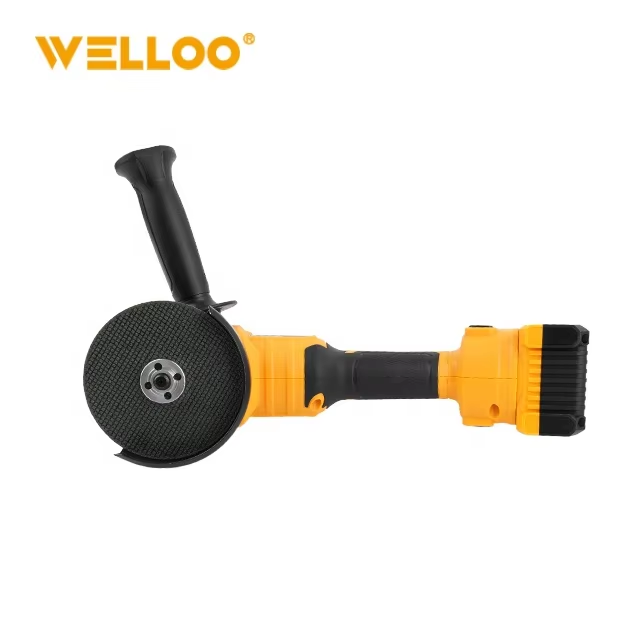
Professional adoption of power tools reflects a clear business logic: workers equipped with appropriate power tools complete projects more efficiently, reduce labor costs per unit of output, and deliver higher quality results. Whether in construction sites, manufacturing facilities, maintenance departments, or specialized trades, power tools have become indispensable because they enhance productivity while reducing operator fatigue and injury risk. The investment in quality power tools typically pays for itself through improved output and reduced project timelines.
Understanding Power Tools and Their Core Function
Definition and Basic Characteristics
Power tools are motorized devices designed to perform specific work tasks with mechanical force, speed, or precision that exceeds what manual labor can achieve. Unlike hand tools that depend entirely on operator strength and skill, power tools use electrical, pneumatic, or battery-powered motors to generate the mechanical energy needed for cutting, drilling, fastening, grinding, sanding, and numerous other applications. This motorized approach allows power tools to operate at consistent speeds and forces, delivering repeatable results regardless of operator fatigue or variation in technique. The core appeal of power tools lies in their ability to translate electrical or pneumatic energy into precisely controlled mechanical output, making tasks that would be impractical or exhausting by hand routine and manageable.
Power Tools Across Industries
Power tools serve virtually every sector requiring construction, assembly, maintenance, or material processing. In construction and contracting, power tools enable carpenters, electricians, and general contractors to frame buildings, install systems, and finish spaces with speed and accuracy that manual methods cannot match. Manufacturing facilities depend on power tools for assembly lines, material preparation, and quality control processes. Maintenance and facilities teams use power tools for routine repairs, equipment servicing, and facility upkeep. Automotive technicians, fabricators, HVAC professionals, and specialists across every trade rely on specialized power tools designed for their unique applications. This widespread adoption across industries demonstrates that power tools are not niche equipment but rather foundational technology that defines modern professional work.
Why Professionals Depend on Power Tools
Efficiency and Time Savings
The most immediate reason professionals use power tools is the dramatic reduction in task completion time compared to manual alternatives. A skilled carpenter using a cordless drill can install fasteners at a fraction of the time required with a hand screwdriver, and the consistency remains superior throughout an entire day of work. This time efficiency translates directly into reduced labor costs, shorter project schedules, and the ability to take on more work within a given timeframe. When professionals are completing multiple projects or working under tight deadlines, power tools become essential for meeting schedule requirements and maintaining profitability. The efficiency gain compounds across an entire work day, meaning that power tools typically pay for themselves quickly through improved productivity metrics.
Quality, Precision, and Consistency
Power tools deliver superior quality and consistency that manual methods struggle to achieve, particularly in demanding applications or after extended work periods. An electric or pneumatic angle grinder maintains constant cutting speed and pressure, producing finished edges with uniform quality whether the operator is fresh or fatigued. Drill presses, impact drivers, and precision saws ensure that repeated operations produce identical results, which is essential in manufacturing and quality-sensitive applications. This consistency reduces rework, minimizes defects, and ensures that finished products meet specifications repeatedly. Professionals recognize that power tools enable them to maintain exacting standards throughout entire projects, which builds reputation and client confidence while reducing cost-related issues from poor quality or rework requirements.
Reduced Operator Fatigue and Injury Risk
Extended use of manual tools creates significant physical strain, leading to fatigue that compounds across work days and can contribute to repetitive strain injuries. Power tools eliminate much of this physical demand by allowing the motor to provide the mechanical force while the operator focuses on guidance and control. This reduction in physical stress means workers remain fresher throughout their shifts, maintain better focus, and experience fewer work-related injuries. In industries with heavy regulatory oversight of worker safety, the adoption of power tools demonstrates a commitment to injury prevention and worker protection. Employers who equip their teams with appropriate power tools see measurable reductions in workers' compensation claims, lost time incidents, and the cumulative strain injuries that can develop over careers in physically demanding trades.
The Strategic Value of Power Tools in Professional Operations
Equipment Reliability and Availability
Professionals invest in quality power tools because reliability directly impacts their ability to meet commitments and maintain revenue flow. A failed or unreliable tool can halt work, delay project schedules, and damage professional reputation. Professional-grade power tools are engineered for demanding environments, designed with durable components, and backed by manufacturer support systems that prioritize availability and quick replacement or repair. This reliability means professionals can trust their power tools to perform consistently across hundreds or thousands of operating hours. The distinction between consumer-grade and professional-grade power tools reflects this reliability premium, with professionals recognizing that the investment in proven equipment prevents costly downtime and project disruptions.
Versatility and Specialized Applications
The diversity of power tools available allows professionals to select equipment perfectly matched to their specific applications and workflow requirements. Specialized power tools designed for particular trades or applications—such as rotary hammers for concrete drilling, pneumatic nailers for framing, or precision angle grinders for metal fabrication—provide capabilities that would be impossible to achieve with general-purpose equipment. This specialization means that professionals can invest in tools that directly enhance their efficiency within their specific discipline. The ability to match tool selection to application requirements enables professionals to maximize their advantage in efficiency, quality, and safety compared to workers lacking specialized power tools.
Workforce Capability Enhancement
Power tools enable less experienced workers to achieve quality and productivity levels that would otherwise require years of manual skill development. A novice operator using a power tools drilling operation with proper guidance can produce results comparable to a skilled tradesperson, whereas equivalent work with hand tools would demand extensive training and practice. This capability democratization allows organizations to build effective teams more quickly and to deploy staff flexibly across projects. Training requirements for proper and safe use of power tools are significantly less demanding than the years needed to develop equivalent manual skill, making it feasible for organizations to scale operations or adapt to changing project demands without extensive workforce retraining.
FAQ
What distinguishes professional-grade power tools from consumer models?
Professional-grade power tools are engineered with durable components, higher-quality materials, and manufacturing tolerances designed for frequent daily use in demanding environments. These power tools typically feature more powerful motors, greater battery capacity in cordless models, advanced safety systems, and longer expected service life. Manufacturers of professional power tools provide comprehensive support infrastructure including parts availability, warranty coverage, and technical support. While professional power tools cost more initially, they deliver reliability and longevity that make them economical for professionals who depend on daily tool usage to generate revenue.
How do professionals choose among different power tools for specific applications?
Professionals evaluate power tools based on application requirements, frequency of use, power source availability, and reliability standards. For tasks performed multiple times daily, investing in specialized power tools designed for that specific application typically proves more cost-effective than using general-purpose equipment. Professionals also consider power source options—corded, battery-powered, or pneumatic—based on job site conditions and mobility requirements. Safety features, ergonomic design, and compatibility with existing tool systems also factor into professional selection decisions for power tools.
Can power tools replace the need for manual tools entirely?
While power tools handle most production and efficiency-critical tasks, manual tools remain necessary for precision work, confined spaces, and applications where powered equipment would pose unnecessary risks or prove difficult to control. Professional tradespeople typically maintain a complementary inventory of both power tools and specialized hand tools, using each category where its particular strengths provide advantage. The integration of power tools and manual tools allows professionals to optimize efficiency while maintaining the flexibility needed for complex, varied work environments.