 EN
EN


The global trade landscape for woodworking tools has evolved dramatically over the past decade, shaped by shifting tariff policies, complex logistics networks, and increasingly sophisticated sourcing strategies. As manufacturers, distributors, and retailers navigate international markets, understanding the interplay between customs regulations, freight optimization, and supplier relationships becomes critical to maintaining competitive pricing and reliable supply chains. The woodworking tools sector, encompassing everything from precision chisels and hand planes to power routers and industrial-grade saws, faces unique challenges in cross-border commerce due to product classification complexities, material composition scrutiny, and varying quality standards across jurisdictions.
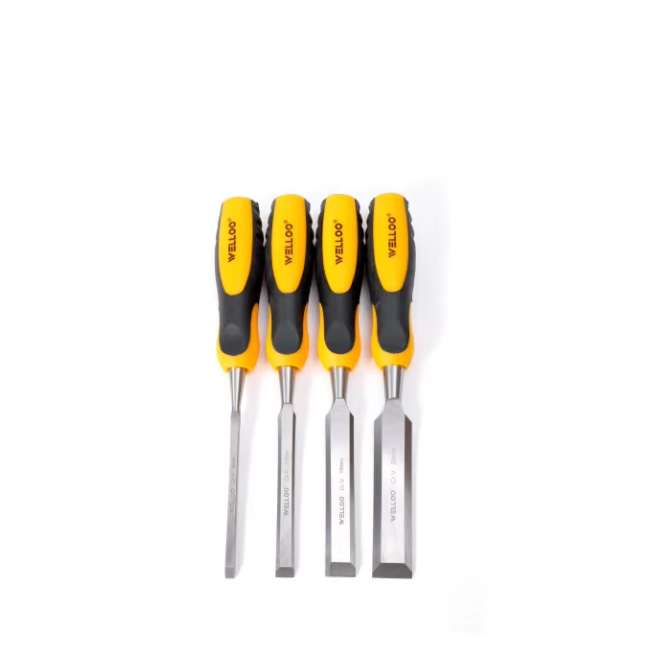
For businesses engaged in importing or exporting woodworking tools, success hinges on developing comprehensive strategies that address tariff exposure, logistics efficiency, and sourcing resilience simultaneously. The fragmented nature of global woodworking tools production—with manufacturing concentrated in Asia, Europe, and North America—creates both opportunities and vulnerabilities in supply chain design. Companies must balance cost optimization against risk mitigation, considering factors such as lead times, minimum order quantities, quality assurance protocols, and intellectual property protection. This article examines the critical dimensions of global woodworking tools trade, providing actionable insights for businesses seeking to optimize their international procurement and distribution operations while navigating the regulatory and operational complexities inherent in cross-border commerce.
Tariff Structures and Their Impact on Woodworking Tools Trade
Understanding Harmonized System Classification for Woodworking Tools
The classification of woodworking tools under the Harmonized System significantly influences tariff rates and compliance requirements. Most woodworking tools fall under Chapter 82 of the HS code system, which covers tools, implements, cutlery, and base metal parts thereof. However, precise classification depends on multiple factors including the tool's primary function, material composition, power source, and intended use. Hand tools such as chisels, planes, and saws typically classify under HS codes 8201 through 8210, while power-driven woodworking tools generally fall under HS codes 8465 or 8467. The distinction between professional-grade and hobbyist woodworking tools can also affect classification, as customs authorities may apply different interpretations based on tool quality, precision specifications, and packaging.
Misclassification of woodworking tools represents one of the most common compliance pitfalls in international trade, potentially resulting in retroactive duty assessments, penalties, and shipment delays. Companies must invest in proper classification expertise, often consulting with customs brokers or trade compliance specialists who understand the nuanced distinctions within the woodworking tools category. The challenge intensifies when dealing with combination tools or multi-function implements that blend characteristics from multiple HS code categories. For instance, a power tool with interchangeable attachments for both woodworking and metalworking applications may require careful analysis to determine the principal function that drives classification. Maintaining detailed product specifications, technical drawings, and material composition documentation facilitates accurate classification and demonstrates good-faith compliance efforts during customs audits.
Regional Tariff Variations and Trade Agreement Implications
Tariff rates on woodworking tools vary substantially across different importing countries and regions, creating strategic opportunities for companies willing to navigate the complexity. The United States typically applies Most Favored Nation duty rates ranging from duty-free to approximately eight percent on various categories of woodworking tools, though specific rates depend on precise HS classification and country of origin. The European Union maintains its own Common Customs Tariff schedule, with rates generally ranging from two to four percent for most woodworking tools, though certain categories may qualify for duty-free treatment. Asian markets present a more diverse landscape, with countries like Japan maintaining relatively low tariffs on woodworking tools while others impose higher rates to protect domestic manufacturing sectors.
Free trade agreements and preferential tariff programs significantly impact the economics of woodworking tools sourcing decisions. The United States-Mexico-Canada Agreement provides duty-free treatment for qualifying woodworking tools that meet rules of origin requirements, making North American supply chains particularly attractive for serving the continental market. Similarly, the European Union's network of trade agreements with countries including South Korea, Japan, and Vietnam creates preferential access channels for woodworking tools manufactured in those jurisdictions. Companies can achieve substantial cost advantages by structuring supply chains to leverage these agreements, though doing so requires careful attention to rules of origin compliance, documentation requirements, and certificate of origin procedures. The strategic value of tariff engineering—designing supply chains specifically to minimize duty exposure—has increased as global tariff structures have become more complex and differentiated.
Tariff Mitigation Strategies Through Bonded Warehousing and Free Trade Zones
Sophisticated importers of woodworking tools increasingly utilize bonded warehousing and foreign trade zone programs to defer, reduce, or eliminate tariff obligations. Bonded warehouses allow companies to store imported woodworking tools without paying duties until the goods enter domestic commerce, providing cash flow advantages and enabling more flexible inventory management. This arrangement proves particularly valuable for businesses maintaining large inventories of Woodworking Tools for distribution across multiple markets, as they can defer duty payments until actual sales occur rather than paying duties on speculative inventory.
Foreign trade zones offer even more substantial advantages, including the ability to perform value-added activities such as repackaging, light assembly, or quality inspection without triggering duty obligations. For woodworking tools importers, FTZ operations can enable duty inversion strategies where finished goods enter under lower tariff classifications than the component parts would individually attract. Companies may also destroy, return, or re-export defective woodworking tools from an FTZ without ever paying duties on those items. The administrative requirements for FTZ participation have decreased in recent years as customs authorities have implemented streamlined application and reporting processes, making these programs accessible to mid-sized importers rather than exclusively large multinational corporations. However, successful FTZ utilization requires sophisticated inventory management systems capable of tracking goods through zone admission, manipulation, and final entry into commerce.
Logistics Optimization for International Woodworking Tools Movements
Modal Selection and Cost-Service Tradeoffs in Woodworking Tools Shipping
The physical characteristics of woodworking tools—typically heavy, moderately valuable, and requiring protection from moisture and impact—create specific logistics considerations that influence modal selection decisions. Ocean freight remains the dominant transportation mode for international woodworking tools shipments due to favorable economics for dense, heavy products moving in container-load quantities. A full container load of woodworking tools from Asian manufacturing centers to North American or European destinations typically costs between two thousand and six thousand dollars depending on route, season, and market conditions, translating to transportation costs of just a few percent of landed value for most tool categories. However, ocean transit times ranging from three to six weeks necessitate longer inventory pipelines and greater demand forecasting accuracy.
Air freight provides an alternative for time-sensitive woodworking tools shipments, new product launches, or inventory replenishment situations where stockouts threaten customer relationships. The cost differential between ocean and air transportation typically ranges from eight to fifteen times higher per kilogram for woodworking tools moving on major trade lanes. This substantial premium limits air freight viability to specific scenarios: high-value precision tools with favorable value-to-weight ratios, urgent replacement shipments for critical customers, or initial stocking quantities for market testing before committing to larger ocean shipments. Some companies employ hybrid strategies, maintaining base inventory through ocean freight while using air freight for demand surges or expedited replenishment. The emergence of premium ocean services offering transit times intermediate between standard ocean and air freight has created a middle ground that works well for certain woodworking tools categories where neither traditional ocean nor air economics make optimal sense.
Consolidation Strategies and Less-Than-Container-Load Considerations
Many importers of woodworking tools lack sufficient volume to justify full container loads on every purchasing cycle, necessitating consideration of less-than-container-load and consolidation approaches. LCL shipments allow companies to import smaller quantities while sharing container space and costs with other shippers, though per-unit transportation costs typically run thirty to fifty percent higher than full container equivalents due to additional handling, documentation, and deconsolidation expenses. For businesses importing diverse woodworking tools assortments from multiple suppliers, consolidation services that aggregate purchases at origin before shipping as a unified container can substantially reduce logistics costs while simplifying customs clearance and inland distribution.
Third-party consolidators specializing in woodworking tools and related hardware products have emerged in major manufacturing regions, offering scheduled consolidation services that operate like bus routes—departing on fixed schedules regardless of whether any single customer fills an entire container. These services prove particularly valuable for small and medium importers who need consistent supply but cannot commit to container-load minimum order quantities from individual suppliers. The consolidation approach also mitigates the quality and reliability risks inherent in placing large orders with single suppliers, as companies can diversify their woodworking tools sourcing across multiple manufacturers while still achieving favorable logistics economics. However, consolidation introduces additional touchpoints in the supply chain, each representing potential delay or damage exposure, requiring careful vendor selection and clear contractual terms regarding liability for loss or damage during the consolidation process.
Last-Mile Distribution and Customs Clearance Efficiency
The final stages of international logistics—customs clearance and last-mile distribution—often consume disproportionate time and cost relative to their physical distance, particularly for woodworking tools subject to regulatory scrutiny. Efficient customs clearance depends on accurate and complete documentation submitted well in advance of cargo arrival, enabling customs authorities to conduct risk assessment and release determinations before physical presentation. Companies importing woodworking tools should implement pre-clearance practices, submitting entry documentation and duty payments before vessels dock or aircraft land, allowing immediate release once cargo is physically available. Participation in trusted trader programs such as the U.S. Customs-Trade Partnership Against Terrorism or the EU Authorized Economic Operator scheme can dramatically reduce examination rates and clearance times, providing competitive advantages in markets where speed-to-shelf drives sales success.
Last-mile distribution costs for woodworking tools vary substantially based on delivery density and order characteristics. Business-to-business shipments to retailers or distributors typically move efficiently through less-than-truckload freight networks, with costs proportional to weight and distance. However, the growth of direct-to-consumer e-commerce for woodworking tools creates more challenging last-mile economics, as residential deliveries of heavy, low-value items like hand tools or accessories may cost more to deliver than the products are worth. Some companies address this challenge through hybrid distribution models that emphasize ship-to-store for heavier woodworking tools items while offering direct shipping only for higher-value or lighter products. Others establish regional distribution centers positioned to enable economical ground delivery to major metropolitan markets within two business days, meeting customer expectations without incurring premium carrier charges.
Supplier Selection and Sourcing Strategy Development
Evaluating Manufacturing Capabilities and Quality Assurance Systems
The global woodworking tools manufacturing landscape encompasses suppliers ranging from small workshops producing hand-forged traditional tools to highly automated factories manufacturing precision power tool components at massive scale. Effective supplier evaluation requires understanding not just current capability but also process stability, quality management maturity, and capacity for continuous improvement. Companies should conduct comprehensive factory audits examining equipment condition, production flow organization, raw material inspection procedures, in-process quality checks, and final product testing protocols. For woodworking tools where cutting edge geometry, material hardness, and dimensional precision directly impact performance, verification of metallurgical testing capabilities and calibrated measurement equipment becomes essential.
Quality assurance systems for woodworking tools manufacturing should extend beyond final inspection to encompass incoming material verification, process control monitoring, and statistical sampling throughout production. Suppliers operating under ISO 9001 certification provide baseline assurance of documented quality management systems, though certification alone does not guarantee consistent output quality. More sophisticated buyers implement source inspection programs, stationing quality representatives at supplier facilities during production runs to identify and correct issues before shipment rather than discovering defects after international transit. For critical woodworking tools applications where performance or safety implications are significant, pre-shipment testing against relevant industry standards provides additional assurance. The investment in robust quality oversight typically pales in comparison to the costs of warranty claims, customer dissatisfaction, and market reputation damage resulting from defective products.
Negotiating Terms and Managing Supplier Relationships
Commercial terms for international woodworking tools procurement extend well beyond unit pricing to encompass payment terms, minimum order quantities, lead times, quality warranties, intellectual property protections, and exclusivity arrangements. Successful negotiations balance immediate cost objectives against longer-term relationship considerations, recognizing that suppliers making reasonable margins are more likely to prioritize production scheduling, accommodate design changes, and maintain consistent quality than those operating at break-even. Payment terms typically reflect the power dynamics between buyer and supplier, with established buyers securing net thirty or net sixty day payment terms while new customers often face requirements for advance deposits or letters of credit. For smaller importers, payment term negotiations may yield less favorable results than efforts to reduce minimum order quantities or secure more flexible delivery scheduling.
Long-term supplier relationships for woodworking tools procurement should be structured around mutual value creation rather than purely transactional exchanges. Companies that share demand forecasts, involve suppliers in new product development, and provide stable order patterns typically receive preferential treatment during capacity constraints, more favorable pricing adjustments, and greater willingness to customize products for specific market requirements. However, relationship investments should be proportional to supplier strategic importance, with companies maintaining multiple sourcing options for commodity woodworking tools while deepening partnerships with suppliers of differentiated or proprietary products. Formal supplier development programs that provide technical assistance, quality training, or equipment financing can accelerate capability improvement while building switching costs that protect relationship investments. Regular business reviews examining delivery performance, quality metrics, and improvement initiatives maintain alignment and identify emerging issues before they escalate into significant problems.
Geographic Diversification and Supply Chain Resilience
Recent disruptions including trade tensions, pandemic-related lockdowns, and geopolitical instability have highlighted the vulnerabilities inherent in concentrated sourcing strategies for woodworking tools. Companies previously focused exclusively on cost optimization increasingly recognize the value of geographic diversification, accepting modest cost premiums in exchange for reduced exposure to region-specific disruptions. A resilient sourcing strategy for woodworking tools might include primary suppliers in one geographic region, qualified secondary sources in a different region, and maintained relationships with domestic or near-shore manufacturers capable of emergency production despite higher costs. This approach prevents complete supply interruption if any single source becomes unavailable while maintaining primary supplier volumes sufficient to justify their relationship investments.
Implementation of diversified sourcing for woodworking tools requires more sophisticated supplier management capabilities than single-source strategies, including systems for managing multiple quality specifications, coordinating forecasts across suppliers, and maintaining technical documentation accessible to all manufacturing partners. Companies must also address the intellectual property risks inherent in sharing designs, specifications, and proprietary manufacturing processes with multiple suppliers across different legal jurisdictions. Some businesses mitigate these risks through modular design approaches where different suppliers manufacture non-interchangeable components that are assembled at a controlled location, preventing any single supplier from possessing complete product knowledge. Others rely on contractual protections, though enforcement across international boundaries presents practical challenges that make prevention through information compartmentalization preferable to remedies pursued after infringement occurs.
Regulatory Compliance and Risk Management in Global Woodworking Tools Trade
Product Safety Standards and Certification Requirements
Woodworking tools entering international commerce must comply with diverse and sometimes conflicting safety standards that vary by destination market and product category. Hand tools generally face fewer regulatory barriers than powered woodworking tools, though cutting implements may encounter restrictions related to blade length, edge sharpness, or carry restrictions that vary by jurisdiction. Power tools face substantially more rigorous requirements, including electrical safety certifications, electromagnetic compatibility testing, and specific guards or safety features mandated by different regulatory regimes. The European Union requires CE marking supported by declarations of conformity and technical documentation demonstrating compliance with relevant directives including the Machinery Directive and Low Voltage Directive. The United States generally does not mandate federal safety certification for woodworking tools, though products must comply with applicable Consumer Product Safety Commission regulations and voluntary standards referenced in product liability litigation.
Obtaining necessary certifications for woodworking tools requires early planning and substantial documentation, with testing and certification costs ranging from several hundred to several thousand dollars per product variation depending on complexity and applicable standards. Companies can reduce certification burden by designing product families that share common electrical systems, motor assemblies, or control mechanisms, allowing multiple final products to rely on shared test reports. However, certification requirements sometimes conflict across markets, forcing design compromises or market-specific variations that increase manufacturing complexity. For example, electrical voltage and frequency differences between North American and European markets may necessitate different motor specifications, while differing safety philosophy results in varying guard designs and emergency stop mechanisms. Successfully managing these variations requires close collaboration between product development, regulatory affairs, and manufacturing teams to identify certification-efficient design approaches early in the development process.
Intellectual Property Protection Strategies
The woodworking tools industry faces persistent intellectual property challenges as successful designs attract copying, particularly in jurisdictions with weak IP enforcement. Companies investing in innovative woodworking tools development must implement comprehensive protection strategies that combine legal registrations with practical enforcement mechanisms. Utility patents provide the strongest protection for novel functional features, though the substantial cost and multi-year approval timelines limit patent filing to the most commercially significant innovations. Design patents or registered designs offer faster, less expensive protection for ornamental aspects of woodworking tools appearance, while trademark registrations protect brand names and logos that distinguish products in the marketplace.
Legal registrations alone provide insufficient protection without active enforcement efforts that detect infringement and impose consequences on violators. Companies should implement market monitoring programs that systematically search online marketplaces, trade shows, and retail channels for counterfeit or copied woodworking tools bearing their trademarks or incorporating protected designs. When infringement is identified, graduated enforcement responses beginning with cease-and-desist communications and escalating to litigation when necessary signal that IP violations carry real consequences. Some companies achieve effective deterrence through customs recordation programs that authorize border authorities to seize counterfeit woodworking tools at import, preventing infringing products from entering distribution channels. However, IP protection remains an ongoing investment rather than a one-time action, requiring sustained vigilance and willingness to pursue enforcement actions even when individual cases involve modest commercial impact.
Managing Currency Risk and Payment Security
International woodworking tools trade exposes companies to currency fluctuations that can transform profitable transactions into losses if exchange rates move adversely between order placement and payment. For transactions denominated in foreign currencies, companies face choices between accepting currency risk or implementing hedging strategies that lock in exchange rates. Natural hedging occurs when companies have both revenues and costs in the same foreign currency, allowing gains and losses to offset without explicit hedging transactions. However, most businesses lack perfectly matched exposures, necessitating consideration of forward contracts, currency options, or other derivatives that fix future exchange rates or limit downside exposure while preserving upside opportunity.
Payment security represents another critical risk dimension in international woodworking tools commerce, particularly when dealing with unfamiliar suppliers or customers in jurisdictions with uncertain legal systems. Letters of credit provide traditional payment security mechanisms where banks assume payment obligations upon presentation of conforming documents, though the complexity, cost, and rigid documentary requirements of letters of credit have driven many traders toward alternative approaches. Escrow services specialized for international trade hold buyer funds and release them to suppliers upon confirmation of shipment or delivery, providing security to both parties at lower cost than letters of credit. Trade credit insurance protects against buyer non-payment due to insolvency, political events, or contract repudiation, enabling companies to extend more favorable payment terms while transferring default risk to insurers. The optimal payment security approach depends on transaction size, relationship maturity, and risk tolerance, with many companies employing different mechanisms for different supplier or customer segments.
FAQ
What are the typical tariff rates for importing woodworking tools into major markets?
Tariff rates for woodworking tools vary significantly by product category and destination market. In the United States, most hand woodworking tools face duty rates ranging from duty-free to approximately five percent, while power woodworking tools typically encounter rates between two and four percent. The European Union generally applies tariff rates of two to four percent on woodworking tools imports from non-preferential origins. However, these rates can be reduced or eliminated through free trade agreements, preferential tariff programs, or temporary duty suspensions. Precise rates depend on specific Harmonized System classification at the eight or ten digit level, country of origin, and whether any special trade programs apply. Companies should consult with customs brokers or trade compliance specialists to determine exact applicable rates for their specific woodworking tools products and sourcing arrangements.
How can small businesses compete with large importers in woodworking tools sourcing?
Small businesses can successfully compete in woodworking tools sourcing by focusing on differentiation rather than attempting to match large importers on price for commodity products. Strategies include identifying specialized or niche woodworking tools categories underserved by major distributors, developing direct relationships with smaller manufacturers willing to accommodate lower minimum order quantities, and leveraging consolidation services that enable container-load economics without container-load purchase commitments. Small importers can also compete through superior customer service, faster response to market trends, and willingness to customize products for specific applications that large distributors find uneconomical. Additionally, small businesses should explore regional manufacturing sources that may not interest large importers due to capacity limitations but offer sufficient volume for smaller operations. Building strong supplier relationships through consistent orders, prompt payment, and collaborative problem-solving often yields better service and flexibility than larger customers achieve through volume alone.
What documentation is required for customs clearance of woodworking tools shipments?
Standard documentation for woodworking tools customs clearance includes a commercial invoice detailing the transaction value, quantity, and product specifications, a packing list identifying carton contents and weights, and a bill of lading or air waybill evidencing the transportation contract. Additional documents may include certificates of origin when claiming preferential tariff treatment under trade agreements, safety or compliance certifications demonstrating conformity with destination market regulations, and importer security filing information submitted in advance for ocean shipments to the United States. For certain woodworking tools categories, specialized documentation such as material composition declarations, country of origin affidavits, or anti-dumping case certifications may be required. Maintaining accurate and complete documentation significantly reduces clearance delays and examination risk, while also protecting against penalties for documentation deficiencies. Working with experienced customs brokers ensures that all required documentation is properly prepared and submitted according to the specific requirements of each destination market.
How do free trade agreements impact woodworking tools sourcing decisions?
Free trade agreements can substantially influence woodworking tools sourcing economics by eliminating or reducing tariffs for products originating in partner countries. However, obtaining preferential treatment requires compliance with rules of origin that specify minimum regional content, manufacturing processes, or value-added thresholds necessary for products to qualify as originating. For woodworking tools, origin determination can be complex when components come from multiple countries, requiring careful analysis of where substantial transformation occurs and whether regional value content thresholds are met. Companies may find that restructuring supply chains to source more components from FTA partner countries enables tariff savings that offset any incremental procurement costs. Alternatively, businesses might establish final assembly operations in FTA partner countries to confer origin on products assembled from globally sourced components. The strategic value of FTA-compliant sourcing depends on the magnitude of applicable tariff rates, the cost differential between FTA and non-FTA sources, and the administrative burden of documenting origin compliance for customs authorities.
Table of Contents
- Tariff Structures and Their Impact on Woodworking Tools Trade
- Logistics Optimization for International Woodworking Tools Movements
- Supplier Selection and Sourcing Strategy Development
- Regulatory Compliance and Risk Management in Global Woodworking Tools Trade
-
FAQ
- What are the typical tariff rates for importing woodworking tools into major markets?
- How can small businesses compete with large importers in woodworking tools sourcing?
- What documentation is required for customs clearance of woodworking tools shipments?
- How do free trade agreements impact woodworking tools sourcing decisions?